· AI & Future Tech · 4 min read
The Roadmap to Automation: The Future of AI Diagramming
This roadmap outlines our vision for the future of AI diagramming, focusing on automated GitHub syncing, cloud component icons, and continuous documentation pipelines to close the documentation gap in software development.
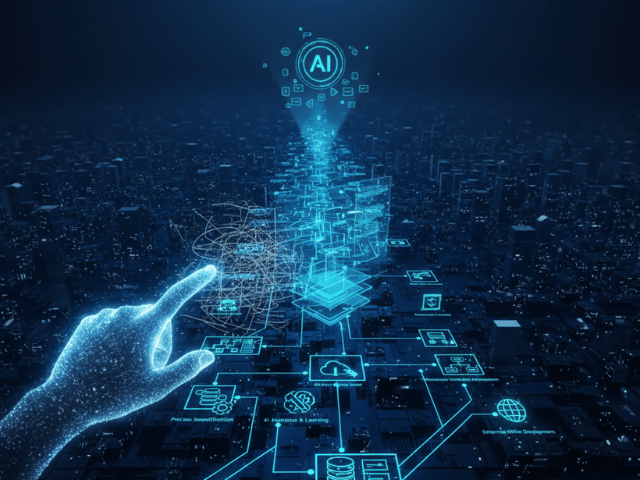
Software development is accelerating. AI coding assistants like GitHub Copilot and Cursor are helping us write code faster than ever before. But documentation is lagging behind. We are writing code at Mach 10, but we are documenting it at walking speed. This creates a dangerous “Documentation Gap.” The code becomes complex and undocumented, leading to technical debt and onboarding nightmares.
We founded AI Diagram Maker to close this gap. We started by solving the “Blank Canvas” problem using text-to-diagram generation. But we are not stopping there.
This roadmap outlines our vision for the future of AI diagramming. We want to be transparent about what we have built, what we are building right now, and where we are going.
Where We Are Today: Text-to-Diagram
Today, we have solved the friction of creation.
Solving the “Blank Canvas” Problem
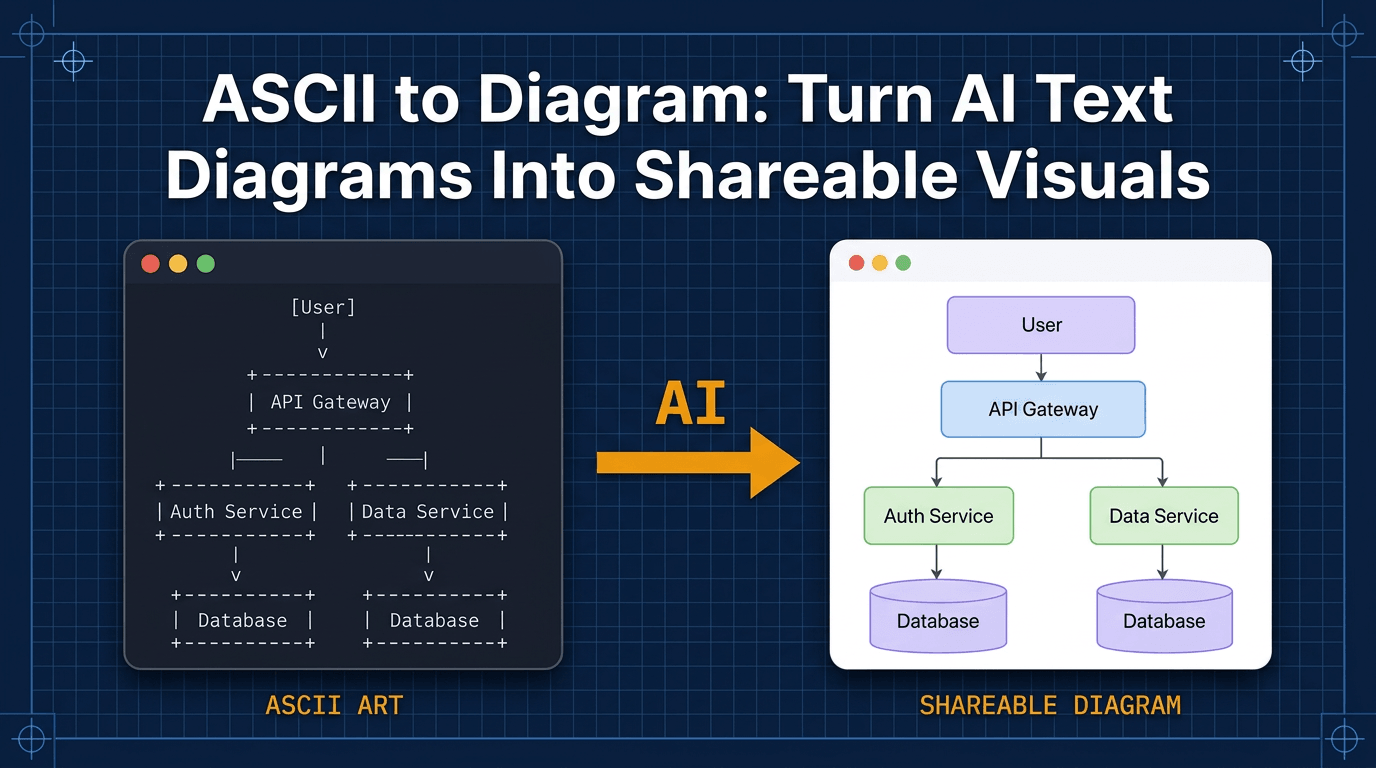
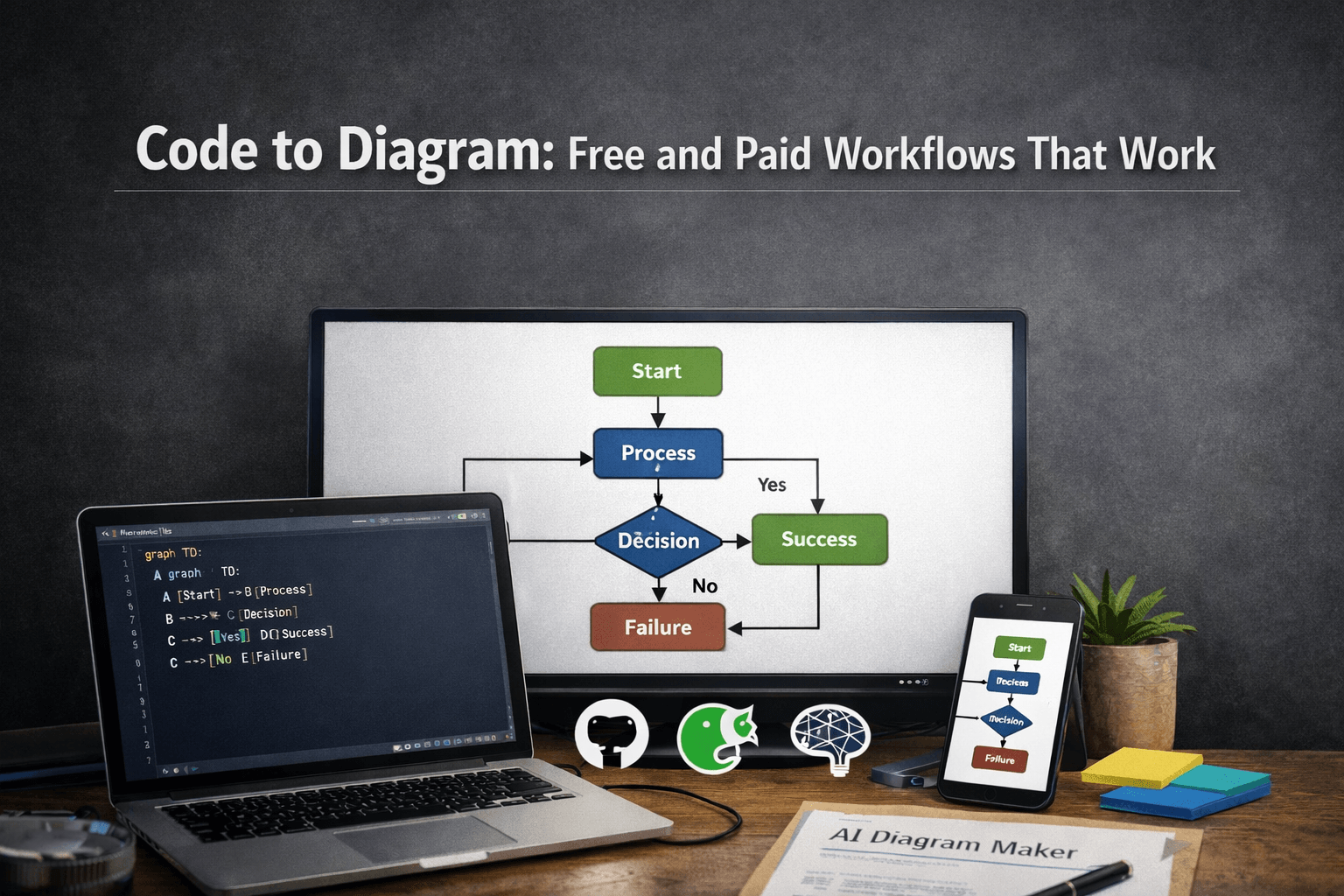
Before our tool, staring at a blank screen in Lucidchart was a productivity killer. You had to drag boxes manually. Now, you can generate Flowcharts, Sequence Diagrams, and ERDs simply by describing them or pasting your code. We have successfully decoupled the logic from the layout.
The Current “Manual Export” Workflow
Currently, our workflow relies on you. You generate the diagram. You export the D2 code or the SVG. You commit it to your repository. We know this is a manual step. We deliberately built it this way first to give you control. It allows you to inspect the output and own the source file. It is a robust, reliable workflow for engineers who care about precision. For more on this, see our guide on The “Export & Commit” Workflow: Version Control for Diagrams.
The Next Frontier: True Diagram Automation
But we know you want more. You want the diagram to update itself.
Coming Soon: Automated GitHub Syncing
We are actively building a native integration with GitHub. Imagine this: You change a class structure in your Python code. You push the commit. Our bot detects the change. It analyzes the impact on existing diagrams. It regenerates the Class Diagram. It opens a Pull Request with the updated D2 file and SVG image. Narrative: No more manual commits. Your documentation stays in lockstep with your code automatically. The “Documentation Gap” disappears.
Coming Soon: Cloud Component Icons
Right now, our system architecture diagrams use abstract geometric shapes. Boxes and arrows. This focuses the conversation on topology. But we know that sometimes you need to show that it is an AWS Lambda function, not just a generic “Function.” We are working on adding icon libraries for AWS, Azure, and Google Cloud. You will be able to say “Replace the database box with the RDS Postgres icon,” and the visual will update to match standard cloud architectural patterns. Narrative: Moving from abstract boxes to AWS/Azure specific icons.
The Vision: Diagrams That Write Themselves
Looking further ahead, we see a world where you do not even have to prompt the AI.
Continuous Documentation Pipelines
We envision a CI/CD pipeline step: npm run docs:generate. This script scans your entire repository. It identifies the API endpoints. It identifies the database schema. It generates a full suite of diagrams—Sequence, ERD, Class—and publishes them to your internal developer portal. Documentation becomes a byproduct of compilation. It is never out of date because it is rebuilt on every deploy.
Integration with “Vibe Coding” Tools (Cursor, Windsurf)
We are also looking at deep integration with the new wave of AI IDEs. Imagine highlighting a function in Cursor and asking “Draw the sequence diagram for this.” The diagram appears in a sidebar inside your editor instantly. You debug visually without ever leaving your “vibe coding” flow.
Why We Are Building This Openly
We are sharing this roadmap because we are building for developers.
Building for Developers, With Developers
We want your feedback. Does the manual D2 export work for your team? Would you prefer a CLI tool or a GitHub Action? Listening to User Feedback on D2 and Workflow We chose D2 as our underlying engine because it is open and text-based. We believe in open standards. We are committed to building a tool that respects your workflow, your data, and your time. The future of diagramming is not about drawing better boxes. It is about understanding code better. Join us on the journey.
The Programmable Diagram: A Developer’s Guide to D2 and Text-Based Visuals
For a deeper dive into the foundational principles behind our vision and the power of text-based diagramming, refer to our comprehensive guide: The Programmable Diagram: A Developer’s Guide to D2 and Text-Based Visuals.